Wednesday, July 31, 2013

An unhappy coffee experience

You can be sure that Aussies have an unhappy relationship with the US when the issue of coffee is discussed on the National News in serious tones. But while we often hear about "that disgusting muck that passes for coffee in the US", or "a pale imitation of the real thing", and sometimes, "it's even worse than used dishwater", we rarely hear about what the Yanks think about the glorious beverage we treat with deep respect.

I was delighted when I attended a conference in Sydney recently, to discover that there wouldn't be urns of stale coffee waiting to be dispensed into ghastly styrene cups at break times, or even barely palatable ground and filtered coffee, which has often been sitting for hours and become bitter and decidedly unpleasant. No! The organisers clearly understood the needs of the group and had arranged for four high-tech, mobile coffee machines, staffed with keen-eyed and enthusiastic baristas, to wait on attendees. The beans were freshly roasted, then ground as needed, the milk (your choice of full cream, low fat or soy) heated and frothed as required, to become a welcome cappuccino. Yeehaaaaa!
Not quite conference coffee, but close enough!
At morning break, the situation on the coffee machines was as streamlined as humanly possible; one person writing the name and order on the plastic lid, one person working the coffee grinder and filter basket, (or hot water for those who wanted tea) and another frothing the milk. Very impressive!

However, not everyone was happy.

I was eagerly waiting for my order when I became aware of a tense, some might even say terse, exchange between a barista and a conference attendee, an American woman who clearly wasn't happy with the beverage she had been given.

"This isn't cawfee, I want regular cawfee."

"Yes, that's what I've made you."

"No it's not. I just want cawfee."

The look of complete confusion on the barista's face would have been amusing in a different place. You could see her thinking "You asked for coffee, we made you coffee - how could that be wrong?"

My attempt at explaining the differences in terminology, strength and taste were met with an icy chill - clearly the woman needed her kind of coffee NOW!

The cogs in the American woman's brain were apparently struggling with lack of caffein. She began a few sentences, then finally spluttered: "I want American cawfee".

A look of comprehension "Oh you mean a long black!"

Oh deary me - this was not going well.

The poor American couldn't bring herself to repeat the words, such is the power of cultural taboos and inappropriate language with its racist overtones. I'm not sure what she was visualising, but I doubt it was a cup of coffee.

By now her husband had joined her and taken his cup of coffee - aka cappuccino - with a look of disgust. It appears that they hadn't realised that simply ordering a "coffee" will lead to confusion and that in the hurly burly of the noisy morning break, and without further clarification, that a cappuccino would be produced with a professional flourish.

So, it goes both ways, it seems that on the subject of coffee, the differences in our expectations and tastes far outweigh the similarities and that many of us return home to our respective countries with tales of undrinkable coffee.
from: http://inspiredm.com/coffee-infographics/
In the interests of easing cross cultural coffee tension it might be an idea to study How to order coffee before leaving home ;-)

My previous spluttering post about the American excuse for coffee is here.

.

Thursday, July 18, 2013

Perplexing signs which lead to questions rather than answers.

What on earth does this sign, strategically placed atop the motel toilet seat, tucked in carefully and neatly between the lid and the seat mean? 

"Hygenically Cleaned
and Sealed
for your Protection"
I understand the individual words and I think I know what it's getting at, but why is it considered necessary? It raises so many questions ... most appear to have no answer.

Of course it's nice to know that someone has spent time hygenically cleaning the toilet, that's great! So much more welcoming than an unhygenically cleaned loo, brilliant in fact and totally welcoming after a long coffee fuelled drive.

Good to know that a vicious chemical has been sloshed around because as we all know it's so very important for the rear end to be protected in this way and for that chemical to be flushed away into the sewerage system to be treated, neutralised and "disposed of". Vital for one's health wouldn't you say?

Seriously though, I'm never sure what it is I'm meant to be protected from. Extensive research (I asked a couple of friends) has led to more confusion. There are vague comments, some lacklustre handwaving and the implication that "Really you should know about this without being so uncouth as to need to ask."

Clearly I'm not being protected from a white pointer or a croc. It's possible that any stray red-backs or white tails (small, particularly nasty spiders) have been moved on and that's welcome news, but somehow I don't think the sign relates to spiders.

But this is Australia, so it's possible I suppose.

However it's not the toilet I'm most concerned about when arriving at a motel. It's the cutlery and crockery I'd be keen to see with the sign strategically placed, obvious and reassuring:

Because, at present, my dread is that the same person who "hygenically" cleaned the toilet may have inadvertently used the same cloth to "clean" the mugs and glasses after the previous occupant left them unwashed, with toothpaste smeared around the rim, or with dregs of tea or whiskey in the bottom. 

The cleaner wonders: "Hmm, let's see, which cloth did I use in the bathroom? Was it this one, or that one? Oh, hang it all, who cares, no time to waste, on with the cleaning!"

Or perhaps the previous occupant had a cold sore, the flu, a sneezy snuffly cold or some other infection; and being a thoughtful kind of soul they swished some lukewarm water around the drinking vessel then dried it with the bath mat or bath towel, generously spreading germs, soap debris and assorted grime around. They've then placed the items neatly back in place ready for the next occupant to use without any trustworthy sign reminding one to wonder about hygiene or protection.

In short, the sign presumably put there to reassure me, is anything but reassuring!

.


Wednesday, May 29, 2013

My new neighbour - Rattus lutreolus, the native swamp rat

My new best friend, now officially named Swampy! At least I hope he'll be a friend considering that the swamp rat or Rattus lutreolus is a protected mammal and setting traps of the terminal variety is a definite no no.
Fossil records for Rattus lutreolus date back around 4000 years making it a relatively new animal in Australia, but without the yuk factor of recent arrival, rattus rattus, which is thought to have arrived here with the First Fleet a little over 200 years ago. Rattus rattus are the ones to watch out for; they carry fleas which in turn carry diseases which are harmful to humans (think in terms of the bubonic plague or black death) and will happily take up residence in homes and generally create havoc.

In contrast, Rattus lutreolus is a shy inoffensive creature, dieting on insects, funghi, seeds and grassy stems, and I've been assured by the Museum of Victoria that they don't pass on ghastly diseases.  Given that this little fellow (or possibly girl - I have no idea which) arrived unannounced on Saturday this is good news.

The Discovery Centre at Museum Victoria has a service where you can email them a photo for identification purposes. So, on Sunday, when it was obvious that a creature of a rat like appearance had begun burrowing near my very small pond and compact rockery, (small mounds of scattered pebbles and dirt were a dead give away) I sat patiently by the window, camera at the ready and spent far too much time enchanted by the scampering, munching, skittish little creature. I got the photo above and promptly emailed it to the Museum, not expecting a reply for weeks as per the advice on the web site. However within a couple of hours they'd got back to me - that's impressive!

My concern is that the swamp rat's penchant for digging burrow systems and constructing runways will be bad for our garden. *Wails - I'm new to this permaculture business, give me a chance and please leave my yam, lemon grass and the water chestnut alone!

I phoned the wildlife rescue people thinking they might take him to what I'd consider a better location, but was told quite firmly that the rat has chosen my backyard and it knows what it's looking for.  They won't assist by relocating it which would most likely lead to it dying because a more dominant creature wouldn't take kindly to an intruder dumped on its doorstep.

So it looks like we'll be neighbours for a while yet, or at least till he moves on, or a wandering cat gets him. (We don't own a dog or cat so there was no home grown deterrent). In the wild, owls and other birds of prey would be the main predators of the swamp rat though he does seem quite nervous when the pigeons land nearby and darts incredibly quickly behind the pots. Unlike some rats, they're active both day and night which makes for good entertainment and photography!
Swampy doesn't appear in the photo above, however behind the dragon it's possible to see the scattered soil covering the right half of the tiny pond which used to be water right up to the yam (with the heart shaped leaves) and water chestnut to the left of the yam (it looks a bit like a stiff grass). It's now mostly covered in, as a result of enthusiastic digging and pushing pebbles aside, which might, with a bit of luck suit those plants better!


Further information is available here and some basic identification information from the Museum of Victoria here.


.

Thursday, May 9, 2013

Reflections on Images of America. The 2013 Blogging Challenge.

An alphabet completed, yet so much left unsaid, images of pharmacies which seem more like supermarkets, birdcalls and stars so different to home. Light switches that are upside down, appliances which switch on as soon as they're plugged in, incredibly cheap fuel from petrol (gas) stations where you have to prepay and get a refund if you misjudge the quantity needed, abundant and inexpensive fruit and vegetables in supermarkets which were stocked with enormous arrays of similar canned and packaged foods making choice a challenge. And where oh where do they keep the muesli? Blank looks whenever I enquired, that must be another instance of a different word used for the same product - FYI, granola is not a substitute for muesli!


I've completed the last two years of the Blogging from A-Z Challenge and loved the experience, but ended up blogged out - possibly entering two blogs each year was a bit of overkill, and tackling a serious topic each year as well (Workplace Bullying and Climate Matters) was a huge job and very draining.
This year I knew time would be an issue and was unsure that I'd be able to complete the entire alphabet, so didn't formally enter the challenge. I really missed the camaraderie and meeting new bloggers, but equally, I didn't feel pressured to visit others or post on the correct day, which was important to me. Most importantly I had fun! The format was a great way to think about a recent trip to the United States differently. I knew I wanted to blog about it, but hadn't found an angle that worked for me ... yet again, I found the A-Z format works well and I'm pleased to have been involved, albeit unofficially!


.


Wednesday, May 8, 2013

Z is for zig-zag - images of America

Hooray, the last letter of the alphabet, the finale and end!

But what's this? More communication problems? Those in the US pronounce this tricky last letter as z.e.e. and Aussies say z.e.d.! However, right now, who cares - this is the last letter, there are zero to go!
Here's a wonderful, long zig-zag fence next to a field (which we'd call a paddock) which I photographed during a walk near Lake Tahoe.
The fence was beautifully constructed - holes had been drilled through the logs, then lined up and a heavy metal stud joined them together - simple, efficient and aesthetically pleasing.
There are a zillion other things I could have included in this alphabetical journey. I could have zeroed in on the zany, the zealous or how America seems to have passed its zenith particularly in regard to being a democratic, fair and wealthy country. Over 46 million people (around 16% of the population) are living below the poverty line - that's an enormous number to get your head around.

Nearly 17 million children are living in 'food insecure' households and 2.8 million are living in extreme poverty. These unsettling figures aren't what's expected in what is arguably the most powerful nation on earth.

The perception in many other parts of the world is that the US is not only a powerful country, but that the people are generally wealthy. I suspect that in part this is perpetuated by film and TV.  Although we may know intellectually that those media are prone to fantasy, it's hard to break free of their influence.

I know first hand how easy it is to fall into the trap of expecting to walk into a movie set! When we travel, we choose what we want to see, often through the tint of rose coloured glasses - naturally enough, after all we've spent a lot of hard earned money to travel overseas. We avoid the distressing and uncomfortable, the down and out or sleazy areas. We choose places to visit that will entertain, amuse, delight or soothe depending on our needs.

Having travelled to the US to attend a series of training sessions in RFT and ACT, I became aware of the less touristy reality. There are huge numbers of young service men and women (Veterans) who are suffering dreadful physical and emotional injuries as a result of the various conflicts the US is, and has been, involved in.

Many of these youngsters are unlikely to recover adequately to live a "normal life" - and so the price of being powerful on the world stage has had huge costs, not only to the Veterans themselves, but to their families and friends and also to those who work with them to assist and support. Nothing happens in isolation, and the ripples spread ... the cost of war means there's less money for new infrastructure, or to repair old or damaged items like roads.

It's been reported that the US has spent $2 trillion in direct costs associated with the wars, but that
this spending was "only a fraction" of total war costs. The "greatest expenses," which the report said were medical care and disability benefits, have yet to be paid to soldiers. In the future, an estimated 2.5 million veterans will receive state benefits. (http://rt.com/usa/us-wars-most-expensive-109/)
When you factor in the indirect costs the figure is apparently closer to $6 trillion, a number so large that few of us can comprehend its enormity ... So, alongside the warm, welcoming and generous locals, there's also an air of despair, despondency and decay far from the superficial glitz and glamour of the attractive and zany tourist havens.


There's a video in this link to footage of veterans and discussion on the hidden costs of the wars.


.


Tuesday, May 7, 2013

Y is for Yosemite - images of America

High in the Sierra Nevada Mountains, (also known as the High Sierra, The Sierras and assorted other names just to confuse the tourists!) way above the gauzy blanket of hazy, smoggy air in the valley below, is Yosemite National Park.
The beautiful Sierra Nevada Mountain range extends around 400 miles north to south (about 650km - the distance between Melbourne and Canberra) and rises from between 5000 to 14,000+ feet (1500 - 4300 metres).
Australia's Great Dividing Range in comparison, is a string of mountains and hills which extends around 3000 kilometres (1,900 miles) from the northern part of Victoria up through New South Wales and into northern Queensland and includes the bulk of the snowy peaks in Australia, aptly named The Australian Alps.
The highest mountain in Australia, Mount Kosciuszko, is in part of the Alps called The Snowy Mountains, and boasts a height of 2228 metres, which is more or less where the Sierras begin, so there's quite a difference! Feeling woozy and lightheaded with altitude is something we rarely need to think about!
The famous photographer Ansel Adams spent much of his artistic life in Yosemite, shooting fabulous black and white images. He remained deeply involved in the area throughout his life and found it a place of beauty and inspiration. He's described in the history of the park as a bit of an agitator and became an advocate for extending the National Parks in the US.
National parks are often under threat and cutbacks are all too common both in the US and Australia. Mining and logging interests see them as an untapped resource and sadly in NSW, Australia, hunters have been granted access at a cost to the taxpayer of $19 million. You really have to wonder at that decision.

However, back to the beautiful Yosemite National Park and Ansel Adams. In 1980 he received the Presidential Medal of Freedom:
"Drawn to the beauty of nature's monuments  he is regarded by environmentalists as a monument himself, and by photographers as a national institution  It is through his foresight and fortitude that so much of America has been saved for future Americans."
Not only talented, but visionary as well!
I was fascinated by the colour of the water in the Merced River which runs through the valley. Crystal clear and a vivid candy-apple green. Small clumps of ice had broken off the banks upstream and floated lazily along, eventually melting and being incorporated into the surrounding water.
The same colour in an Australian river would mean that the water is toxic and there'd be signs around warning you not to eat any surviving fish or use the water in any way. Here it looks fresh and very inviting, though no doubt a bit chilly! I couldn't help but think of the drink marketed as Mountain Dew and wondered if the toxic looking liquid in the bottle was in some way a tribute to this pristine water.

......
National Parks Service - Yosemite
More on Ansel Adams
Shooting in National Parks NSW
Hunting "incident"


.


Saturday, May 4, 2013

X is for Xenophile - images of America

Xenophile: An individual who is attracted to foreign peoples, manners, or cultures.

That sounds good to me! Though I think the more common terms would be - "someone who has the travel bug", "itchy feet" or simply "wants to see the world"!

My early travel memories are of milling around the Melbourne docks with my relatives ... waiting, waiting, and more tedious waiting for a huge ocean liner to leave. We'd have explored a relative's tiny cabin, looked at the schoolroom set up for the children travelling (can't have them missing out on lessons!), and have been shooed away as the time came for the gangway to be pulled up.

Eventually my cousins and I took off (waiting is sooooo boring when you're 5 or 6 years old) scampering around, getting lost amongst the throngs of people and generally whooping it up.

I recall the excitement of purchasing bags of colourful streamers to throw from the dock to the side of the ship where people jostled for a position to catch and hang on the the flimsy paper, keeping in touch with their loved ones for as long as possible before the paper stretched, became taut and eventually snapped as the tugs shunted the ship into position to leave. By this time adult tears were flowing freely as they knew we'd be unlikely to see these people, who'd become so much part of our lives, ever again.

We'd crawl over the atlas below trying to find the countries and towns which had been mentioned. You can get an idea of the size of the atlas from the iPhone at the top left.
Other early memories are of groups of guests at my childhood home.  Chinese people who appeared to be similar to my young eye, but who were unable to converse with each other in their respective languages, and needed to speak in English which was their common tongue.

Sometimes they'd bring their own visiting relatives to meals. I remember one occasion where someone's uncle looked just like the old Chinese men in paintings - he painted me a picture of a Junk bobbing on waves which I still have somewhere. The dinner chatter would be punctuated with questions about how my mother cooked roast lamb, lemon delicious pudding and other dishes unfamiliar to these friends.

Sometimes, there must have  been discussion about the war, (WW2) because I remember my father reminiscing about being on a Naval vessel in the pacific islands and talking fondly about the native peoples who he referred to as the Fuzzy Wuzzys - always with deep respect. I was aware that even though China and our Chinese friends hadn't been directly involved in WW2, they had been struggling with their own conflicts. These dinners were sometimes very sombre affairs.

There was also discussion about far away exotic places with wonderful names, people with strange customs and lands which even smelled different. How could that be possible?! Letters and post cards came in the post, covered with colourful stamps from around the world as relatives and friends would travel, slowly by ship stopping at different ports and sometimes staying somewhere for months on end.
I learned to pronounce some place names and even find them on a map: Tanzania, Tanganyika, Kenya, Stratton Strawless,  Norwich. I never managed any Chinese ones, though I recall attempting to learn Cantonese, sadly with no success at all.

So how does this relate to America?  The answer is both nothing and everything.

I get an enormous amount of satisfaction when I travel.  I'm fascinated by place names and have fun attempting to pronounce them, both at home and abroad. I love conversing with people even when we have no common fluent language, using only mime and basic, mispronounced phrases. Finding out about different cultures is a pleasure, and I'm always reminded how similar we are, no matter where we live.

When friends have travelled I'm the one who sits and listens, asking questions, drooling over photos. Vicarious travel is the next best thing to being there yourself - and there's little chance of catching a stomach bug!

Naturally, one of the other things about travel which provides general hilarity and entertainment is coming across unusual place names and wondering how the name came about, and why it was chosen for that location ...
Some amusing Australian place names are here

What is your favourite place name?

.

Friday, May 3, 2013

W is for Water - images of America

I think I've become a bit of a lake lover since visiting some beautiful ones in the United States.

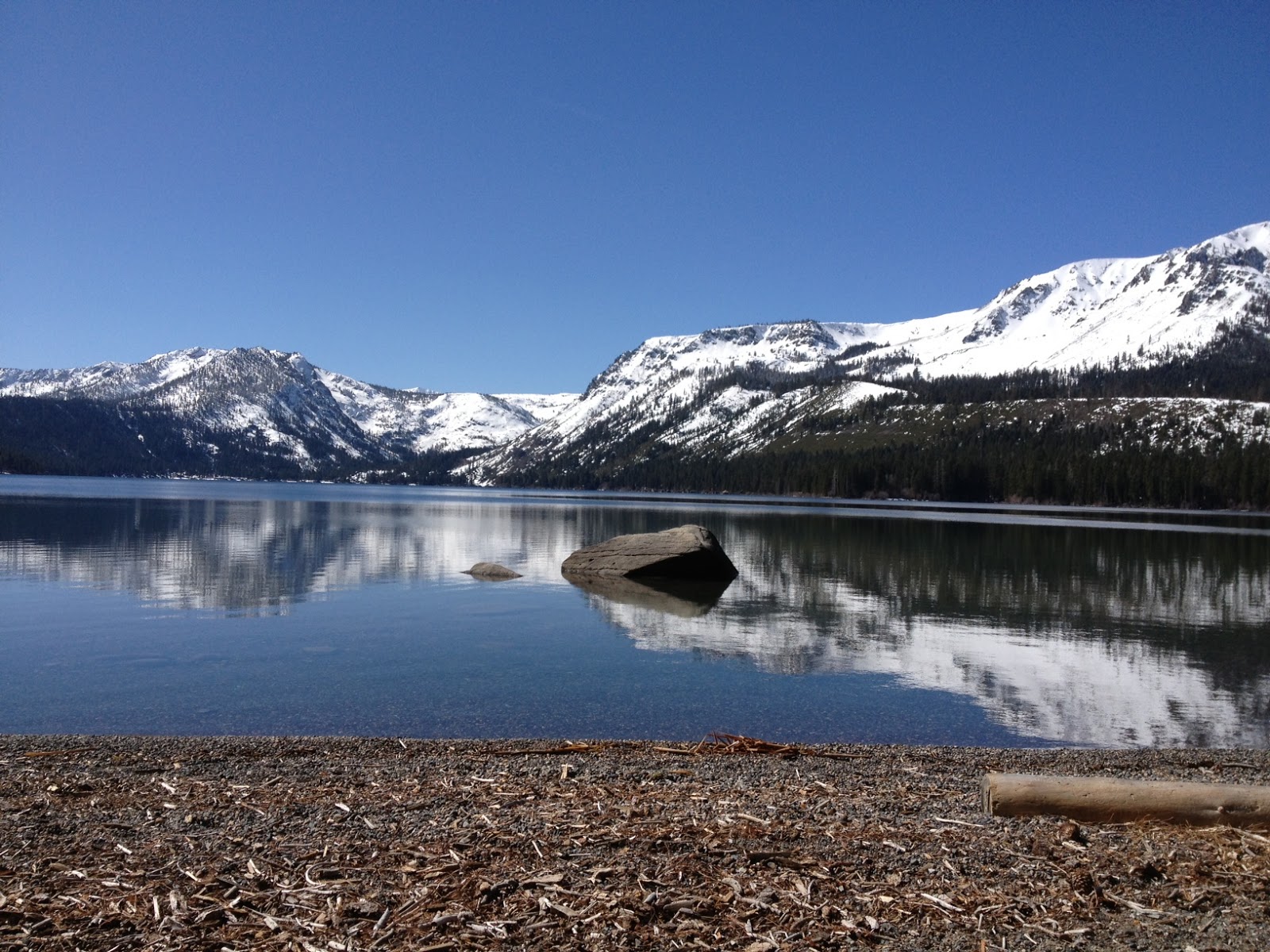
Fallen Leaf Lake.
 Snow and desert were an unexpected combination.
Not a lake, but cheerfully gurgling water - with bear paw prints everywhere and lots, and I mean lots, of fresh scat around - evidence of them waking from their winter's hibernation!
We went for a slip slidey, crunchy snow walk here and were charmed by the wooden huts dotted along the nearby lake. Many appeared empty, but it would be a lovely place to swim and relax in warm weather. Without the bears!

.

Thursday, May 2, 2013

V is for Visionary - images of America

Influential groups of people in the United States saw the benefit of preserving nature for the good of the people, and with the support of President Woodrow Wilson, the National Park Service was created in 1916.
The first designated national park in the world was Yellowstone.
Visionary?
Indeed it was!
Thanks to this vision and the acknowledged benefits of National Parks, nearly 100 countries around the world have followed suite.
That's something to be justifiably proud of.
According an article below, "Last year, almost two hundred seventy-five million people visited the national park system in the United States" (my bold) That's an extraordinary number of both locals and people from all parts of the world.
Why do they come? Scenery has to be high on the list, photography, painting, bushwalking, exploring, recharging their "batteries" or simply to relax and be.
The idea of the National Parks is to "conserve the scenery and the natural and historic objects and the wild life therein and to provide for the enjoyment of the same in such manner and by such means as will leave them unimpaired for the enjoyment of future generations." (my bold)
Unfortunately this is proving more difficult than anticipated back in 1916. (see N is for Noxious, and O is for Oil). Not only as a result of the naturally occurring changing climate, but man made influences are having a detrimental affect as well.
How plants, animals and humans adapt to these changes remains to be seen.


There's some history about the National Parks in the US
here, here and here.
.

Wednesday, May 1, 2013

U is for Unusual - images of America

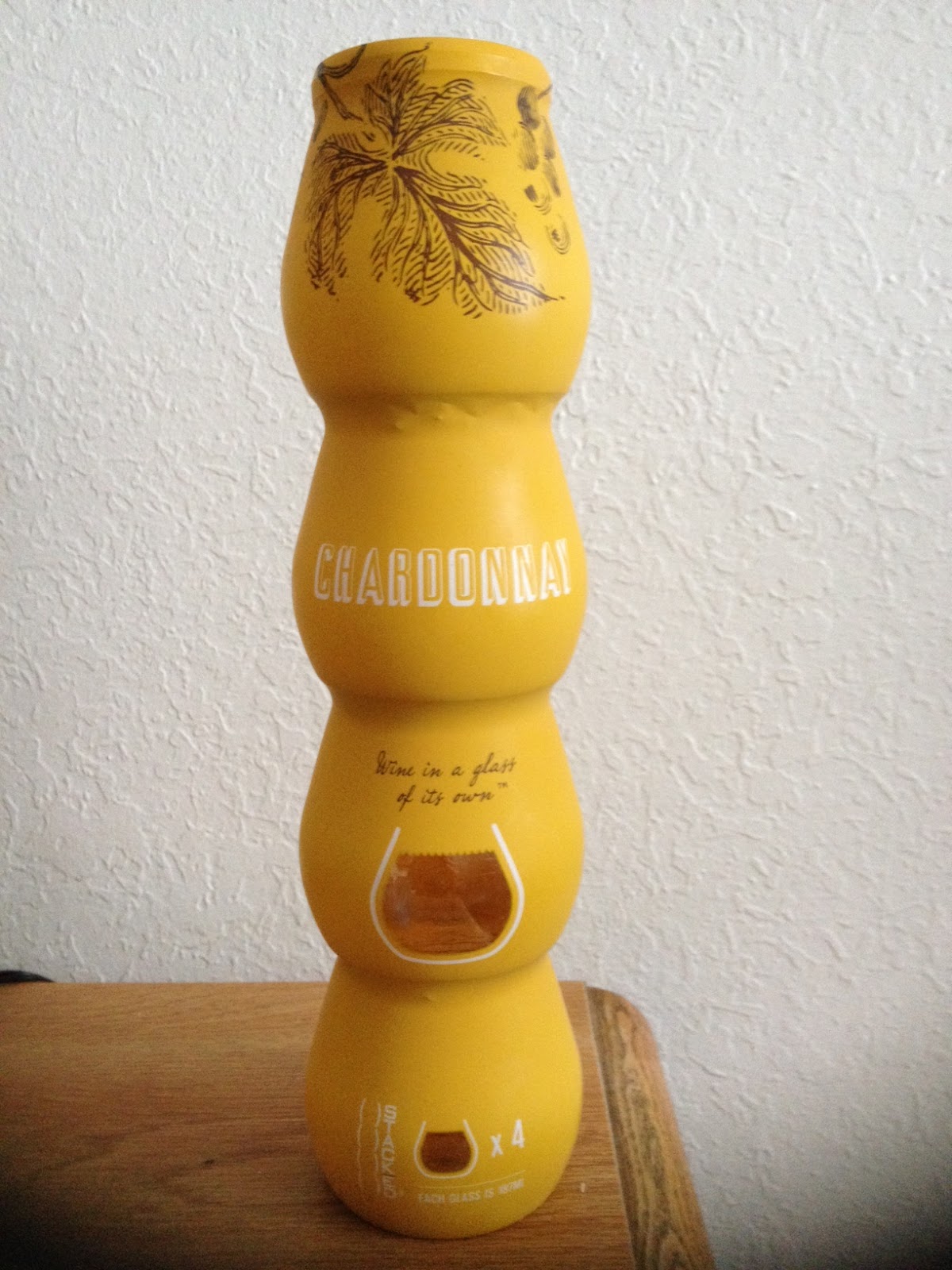
A wine bottle with a difference!
Zip...

... and ready for the picnic :)
The four drinking vessels travelled back to Oz for picnics here. They're a useful souvenir and a fun talking point!

.

Tuesday, April 30, 2013

T is for Tourist - images of America

I've already talked about some aspects of being a tourist in a foreign country. Coffee, motels, fabulous scenery, (and here too) driving, but I haven't mentioned conversations or the near impossibility of reading street and town names let alone pronouncing them well enough to be understood by locals.

It can be a problem at times.

Scenario - "Hi could you direct me to ..... street?"

The person looks at you as if you were speaking some rarely heard strange language, possibly unheard by any living person for the last three thousand years.

Their eyes open wide, you can almost see their brain gears grinding painfully.

"Pardon?" (Americans are incredibly polite - none of our "whadjasaymate, ay?")

So in an effort to get the directions, you ask more slowly, enunciating each word clearly and carefully.

They squint, screw up their face in an effort at concentration ... it sounds a little like English.

"Sorry, could you ... ?"

Smiling hopefully, but almost despairing, you repeat the request for a third time.

A light goes on ... It is English, but different ... So that's what an honest to goodness, dinky-di Australian accent sounds like!

Everyone who's travelled tells tales of mime, misunderstandings, embarrassment, confusion ... and hilarity!

I experienced the joy of attending a professional training session with some 360+ psychologists and social workers, the majority of them from the US. I really appreciated the camaraderie and sharing professional information .... but of equal pleasure was the opportunity to interact and have fun together - and be teased mercilessly by some of the wonderful participants!

Being an Aussie tourist in the US can be kind of weird. We sort of speak a similar language, though our words and phrases often mean quite different things and there are lots of cultural stereotypes to be kicked under the chair. Film and TV has a lot to answer for.

And just when you think you've got a handle on the accent, whump! you come undone.

Awful offal? Offal Offal? Why would my colleagues be inviting me to a lunch spot where they serve offal? I know the saying is "When in Rome do as the Romans do", but  ... yuk. These guys seem nice - and normal - but was accepting the lunch invitation going to be a wise decision?

But I'd never be here again, and isn't that one of the "rules" of travel? to sample local foods?

So wondering what the hell I'd let myself in for, I toddled along trying desperately to understand the nuances of rapid-fire conversation between locals. Sigh - fail.
I mentioned in Images of Reno that my inability to get a hang of the accent let me down again!

The Aweful Aweful burger served at the Little Nugget Diner rates 4 1/2 stars on Urban Spoon - which is pretty good no matter what language you're speaking. It was a great burger if somewhat on the gigantic side. It's a place I wouldn't have found in Reno except for the welcoming locals. Thanks guys!

More on language here ;-)
.

Monday, April 29, 2013

S is for Snow - images of America

Coming from a baking hot Australia, it was glorious to see, feel, hear and smell snow - and be COLD.
Those in cold climates may not understand the desire to be cold, particularly when you're miserable and it's been going on seemingly for ever, and I appreciate that, I really do! But having suffered through the hottest months on record - over 40 degrees celsius for day after long day - and swelteringly hot nights - and sizzled and gasped our way through killing heat and bush fires, it was a wonderful relief.
Snow scrunches delightfully underfoot - when you feet are behaving and not slip sliding every which way! ... and of course when you're not having to work in it, drive in it, shovel it, unfreeze pipes and all the other challenging aspects. But I'm conveniently overlooking the negatives for this post!

When the sun shines, wonderful shadows are cast, moving across the undulating snow in strange ways.

We thought a brisk walk before breakfast was pretty neat - others were more energetic and were jogging. So much for a society populated only by sedentary, overweight folk one hears so much about.

The beauty of snow on the distant shore and peaks is perfect for tourists to stop and ooh and aaah.
Bare bushes, spiky against and rolling curves of the mountains and puffy clouds. A beaut spot for a peaceful picnic.
 Even the plum blossom wants to get in on the act!

.

Sunday, April 28, 2013

R is for Roads - images of America

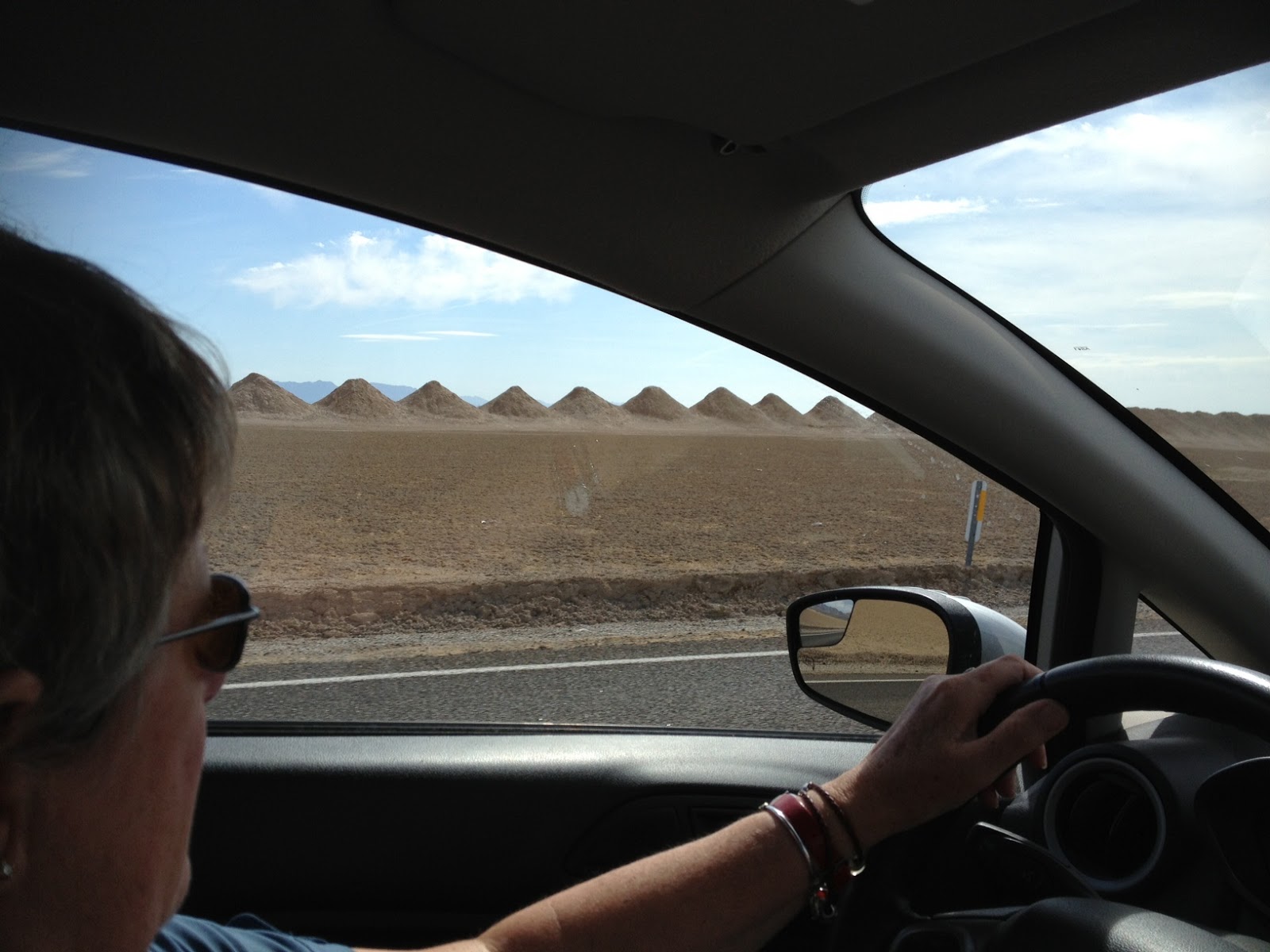
Talking about roads, of course I'm going to mention how terrifying it is being a front seat passenger sitting on the right hand side of the car when you're used to being on that side with a steering wheel in front of you. Used to being in control!

Flinching continually at the traffic is no fun, especially as it seems to be wandering all over the place following some unknown trajectory. Cars and trucks kept swooping in front of us at an extraordinary speed from unexpected and unfamiliar directions.


Why is that person speeding in from the right? He should be on the other side!

I suspect the drivers were, on the whole, safe, competent, law abiding citizens, it just didn't feel like it!

Four lanes of the wretched beasts - groan. Kerthunk, kerthunk, kerthunk went the tyres on the road. Whirrrrrring sounds like a helicopter low overhead were made by the tyres whizzing over the parallel lines in the road surface. Different, unexpected and all taking a bit of getting used to so you're not wondering if it's the car falling apart or some other dire event unfolding.

My sharply sucked in breaths didn't help the already stressful situation. When the GPS mentions turn right, does she mean now or metres ahead at the next sign???

And because you don't know the town or road names on the way to your destination, road signs aren't always particularly helpful. Joy, oh joy.

I suspect the tiny hire car may still show evidence of my fingernails in the seat, particularly from on the narrow, winding, steep roads with no shoulder and deep gutter, where locals naturally wanted to speed along on familiar terrain.

But even though we were hesitant, not one person raged, gave the finger or otherwise showed obvious signs of impatience. WOW!!

Thankfully, after some weeks, my nerves hit overload and subsided into a happy state of submission, or perhaps it was simply exhaustion. Enough in fact, for me to hesitantly suggest that I have a go behind the wheel. The hubster was extremely supportive - enthusiastic really, and made noises of encouragement as I zoomed off, sweat flying from my furrowed brow.


Roads disappearing into the distance with no cars take extra concentration so you don't stray onto the more familiar side!

We may have just been fortunate, but we found that the drivers were amazing courteous compared to many Aussie drivers who seem to consider any hesitation a personal affront. They regularly use the occasion to flex their finger and vocal muscles and test that the horn is still working ... for an extended period of time :(

You have to be a particular kind of person to hold the stop sign at roadworks near Death Valley. There's not a lot to distract or entertain you.
 A road disappearing into a lake. Will it go right or left over the crest?
In tones of wonder, we've been telling people "they made room for each other on the slip lanes", "they allowed other cars in", "no-one was deliberately obstructive", "when we walked across the roads, no one tried to run us over", "someone actually leaned out of the car and apologised that her car had crept forward".

Maybe we were just lucky - no doubt large cities have their own challenges and cranky people, but stressful driving was made significantly more pleasant by the attitude and courtesy of other road users. I wish that was more common here.

Driving in America is an experience I'll never forget, both for the courtesy of the other drivers and the heart stopping fear of everything being back to front!
.