Showing posts with label Australia. Show all posts

Thursday, December 15, 2016

The problem with "flushable wipes" in the outback.

Mt Dare Hotel is more or less in the centre of Australia, not far from the Northern Territory border on the western edge of the Simpson Desert. It's a long, long, long way from anywhere. It's usually crispy dry except on the rare occasion it floods. It's often hot. Very, very hot. We were there in November, and as we left the bar, after having a very welcome beer indoors away from the damn flies, the barman, doing his best Crocodile Dundee impersonation, (complete with 'beater and Akubra style hat), reminded us to use our torches and stomp loudly on the way out to our tent as he'd just been shooing away a "king brown". 
The bar with an interesting selection of stubby holders.
My first thought was ... "Is this some weird outback thing he's doing with beer bottles, and why am I scaring them away?" Followed by "Oh! he's referring to snakes!"

The heat, dust, mozzies and flies can do that to you ....
The newly revamped beer garden is a delight, but ... flies...
What I didn't know then was that a King Brown is another name for a Mulga Snake. That's one I know to be wary of, having watched a particularly long one in a picnic shelter in Corner Country a couple of years ago. Stepping on one in the dark wouldn't be good. (Info on their venom here.)

I stomped vigorously!

As with all travel, there are times when the topic of toilet etiquette comes up. It's no different in the outback. When there's no loo, go behind a bush (some ladies use a small brolly if there's no vegetation), dig a hole and bury your waste, burn or remove any paper and leave the place as you'd like to find it. 

However, there's a new menace cunningly marketed as 'flushable' which creates havoc not only in cities, but in the outback as well. Seeing these little off-white sheets stuck on bushes on remote tracks, fluttering into pristine ancient springs, stomped into red soil and generally creating an eyesore, I kind of wish they'd never been invented. I also have a lot of sympathy for anyone whose job it is to unclog pipes and septic systems where they're an inconvenient, expensive, time consuming menace.  

The ACCC is currently taking court action against the manufacturers of "Flushable" wipes:
“The ACCC alleges that the impression given by the representations which Kimberly-Clark and Pental each made about these products was that they were suitable to be flushed down household toilets in Australia, when this was not the case,” ACCC Chairman Rod Sims said.
“These products did not, for example, disintegrate like toilet paper when flushed. Australian water authorities face significant problems when non-suitable products are flushed down the toilet as they contribute to blockages in household and municipal sewerage systems.”
It's not just suburban household and municipal sewerage systems that suffer. Notices like the one above, in the toilets at the camping ground behind the Mt Dare Hotel, are important to raise awareness of the problems the wipes cause. 

Basically, "flushable wipes" stuff up the septic system and create all sorts of problems which are a pain to fix. 

At one other camping ground there was detailed information about how unpleasant, tedious and time consuming it is for staff to rummage around in the system to locate the clogged spot - and then remove the offending items by hand. Peeeeuw. You really get the feeling people are completely over these things. 

Then there are the stories of wet-wipes clogging the pipes in Septic Pump Trucks and the driver having to clear the hoses manually: a messy, smelly, slow process. Ugh. 

Flushable wipes might technically be flushable, but they create LOTS of problems - if you must use them, put them in the bin. 

And whilst the wipes are generally cursed, so are lazy people who shove dirty clothing, nappies, and even sleeping bags into long drop toiltes; kick cheap broken camping gear behind bushes and and seem to think the outback is a massive garbage dump. 

But all grumping aside, Mt Dare Hotel is great! They put on a decent meal, and it's a beaut spot to stop, share information and listen to tall tales and true from local characters!  


.


Sunday, June 21, 2015

Maralinga; a world apart. It's much more than a place where nuclear experiments were conducted, and well worth visiting.

The tale of secretly testing numerous atomic bombs, and a wide variety of nuclear devices in Australia in the 1950's and 60's, by the British, is a yarn of epic proportions; with twists, turns and sub-plots worthy of an airport novel bought for a long haul flight. 

There are lies and cover-ups, as well as betrayal, misplaced trust, wilful blindness and the obsequious kowtowing to the British, by what appears, from our current time and place, to be a fawning Anglophile Prime Minister (Menzies). 

Personnel involved in the programme, who had strong moral and ethical ideals were warned that Maralinga had become British territory and that whistle blowing on the reality of what happened, the hugely secretive goings on, could result in being shot, or a 30 year jail term under the British Secret Service Act (page 43 Bulletin of The Atomic Scientists). 

Trust us! Nobody could have been out in the blast areas, was the cry. But there were people out there. 

Families, such as the Milpuddie's, who were found camped in a crater formed by a bomb blast - innocent inhabitants going about their daily lives, had their lives changed forever (further information here). The ongoing negative ramifications of living, eating food and drinking water from dangerously contaminated land, lives on in children and grandchildren. 

There were human guinea pigs (Indoctrinee Volunteers and here), animal and vegetation experiments and numerous weapons development tests alongside the more dramatic and "explosive" weapons tests.  Much of the information only came to light 30 years or so after the events. Much more is considered so secret by the British government, that it's been classified (hidden), and will remain that way, forever. 

It's quite a story.

Walking on sites where world changing events occurred can have a deep impact. Sometimes immediate, sometimes surfacing and resurfacing long after the event.

People talk about the impact that visiting Gallipoli had on them, or the sobering effect of seeing the trenches and hearing stories of WW2 battles at Flanders Fields. Sites such as these, of Pearl Harbour, Hiroshima, The Berlin Wall, and similar places around the world have become places of pilgrimage. Destinations where hordes of diverse people gather to share thoughts, reflections, prayers, and hope. Hope that powerful people in the future will pause, tread cautiously and act wisely before making decisions which will set in motion similar catastrophic events. 

Although Maralinga has a different history to those above, in its own way, the impact of what happened there changed the world, many servicemen, and more locally, the landscape and displaced Maralinga Tjarutja indigenous people, forever. 

It needs to be remembered warts, dirty dealings and all. 
I didn't know what to expect as we drove up the long, often featureless, un-signposted road to the gate in the Boundary fence at Maralinga, where the caretaker and tour guide, Robin Matthews, greeted us with gentle courtesy. 

The place was a name from my childhood and not much more. Like others of my generation, I knew there was something to do with testing an atomic bomb, but as a child I suspect my parents didn't discuss the implications of this in depth, and shielded me from discussion. The Cold War was also little but a name. In hindsight, I expect there was unspoken communication between my parents and relatives, as carefully worded news filtered out about what was happening at Maralinga. But having a father who'd been deeply scarred from service during WW2, I also suspect they didn't want to dwell on details or meaning.

So Maralinga remained nothing more than a little visited memory. There was a vague recollection of a Royal Commission, (part of the official report is here) but mostly, it was a place off-limits, with prohibited entry, closed to the world, out in the desert .... somewhere. 

Then  a few months ago, my husband suggested visiting. He'd been doing some research and found that tours were possible. Due to the remote location in South Australia, two nights camping, and a one day escorted tour in a minibus, could be arranged by contacting Maralinga Tours. Being stumped for an idea for his 60th birthday, I figured it'd be a memorable gift! A bit out of the ordinary, educational (an important aspect for gifts in our family!) and completely different. Also, I felt ashamed at my complete lack of knowledge of the area or history of this significant event in recent Australian history. 


We'd been listening to Len Beadell's Blast the Bush as an audio book over what felt like a few hundred kilometres of corrugated, dusty red roads, sometimes having to turn it off as the rattling made it impossible to hear! I was beginning to get a feel for the challenges Beadell had faced, surveying roads to be ready for the expected heavy machinery and hoards of military and other personnel who'd follow to conduct a wide variety of highly secret tests.

But what would be here now? The dot on the map stated in confident black print Maralinga, though some maps show "Maralinga Village" and elsewhere, "Maralinga Community". 

Words have power. River. Lake. Village. City people and visitors from overseas are regularly perplexed about the use of these words in outback Australia where rivers are often parched, barren depressions in baked rusty-red sand, and lakes are crunchy with glittering white salt. This often leads to discussions about why there aren't more people living in remote areas. "There's no water" we say, and their reply is "But look at all the lakes and rivers on the maps, there must be!"

Confusion reigns. How can you explain desert to someone who lives in a place blessed with generously regular rainfall, and has never known drought? How do you explain that so much of our harsh, beautiful land is unforgiving and deadly to those who don't know how to live there? Water is scarce. Without it we die.
Strolling on Lake Gairdner

And so it is with the village of Maralinga. It's a village in name only. The word village conjures up something alien to this land, it's a foreign word, and sits uncomfortably here. If you're visualising a cosy holiday-style, quaint village you'll be sadly disappointed. There are no cheerful homes with the warm glow of lights at night, no bustling tourist stores selling a variety of wares of questionable quality and value. No drinks machines with chilled beverages for the dust covered, weary traveller. Just a kind of ghostly silence, the soughing of a stray breeze through dry leaves of she-oak and desert oak, and the constant regular thump, thump, thump, of the intrusive generator bringing power to the caretaker Robin, and his family, as well as the small groups of tourists. (Bring on the solar panels!!)

Maralinga village is a sombre place. Starkly beautiful in a desolate, almost, but not quite, abandoned way. 

"Camp anywhere you like" says Robin, "make a fire, and if you run out of wood, we've got lots more." 
And so, between the checkerboard ranks of chipped and cracked concrete slabs, 
which were once the termite resistant bases of barracks and laboratories used by thousands of men, we set up camp, walked up to what was once a fountain ... 
... near the remains of the swimming pool ...


... watched the sun set, and phoned home ....

... by accessing the Telstra mobile phone towers which dot the distant railway line linking the east and west coasts of Australia.

But what of the tour itself? 

Tour guide Robin's breadth and depth of knowledge of the various tests and impacts on the Maralinga Tjarutja peoples, his generosity in sharing, his passion for educating others, unflagging energy and enthusiasm were extraordinary. 

This is our history. Up close and personal. Dramatic events on Australian soil with far ranging consequences, which should be taught in schools. Relevant. Confronting .... and regularly ignored. 
298 burial pits, up to 26 metres deep, are now filled with pulverised buildings, contaminated soil, machinery, planes, Toyota LandCruisers, double decker busses, tanks, bulldozers, labs, almost everything which had been left or discarded has finally been decontaminated, burnt, bull-dozered and buried - over 30 years after the British left, pretending that everything was safe, but knowing full well it wasn't. It took around 6 years and $108million to conduct the clean up which was finished in 2000, (More here)
Lunchtime at the decontamination and maintenance sheds.
No one wanted to picnic in the decontaminations shed. 

We'd been joined by other visitors, and for some, the sheer scale of ... everything .... was overwhelming. So much destruction. Vast areas of land impacted (the site measures about 3,300 square kilometres) Too many bombs and experiments, exploring the unknown effects of ways to .... not to put too fine a point on it ... kill people or render equipment useless. 

When the nuclear tests were conducted, little was known about the effects of atomic (and other) bombs and weapons - how do you find out unless you do trials and tests? The military and British government wanted answers to their questions, and what is now known to have occurred shows that the decision was that The End Justifies the Means. 

What happens when an atomic bomb blast hits a bus, a plane, specific plants - at this distance? At a different distance? How about at this angle? And this? And what of people? What happens if they roll, unprotected in the radioactive dust? Now wearing different clothing? How can we decontaminate them? Can we? How do we clean up after contaminating the land? Can we? How much can we get away with before the public begins to question? Do we need to share information? How can we convince the people of Australia and the UK that these experiments are vital to our security? Do they need to know? 

And from the British government, the thoughts seem to have been: "How secretive can we be? Do we need to tell the Australian people (or our own for that matter) what we're doing and how much it's costing?" 6.8 million pounds was spent to build just the airstrip and village - and that was barely the beginning. This was at a time when the British people were enduring severe rationing and using food stamps sparingly. Yet many, many millions of pounds were poured into further construction, the various tests and transporting vast quantities of equipment (including double decker busses, planes, trucks etc etc etc) and people overseas to Australia. Not a cheap exercise by any means.

Little of this is comforting, or nice, or reassuring. Naively placing trust in our elected political representatives without maintaining constant vigilance and questioning what's happening, wasn't then, and isn't now, wise. 
"... Menzies agreed to allow the British to use Australian territory and personnel for the tests without question or even serious discussion with his colleagues: “Cabinet papers show he devoted more time to organising the young Queen Elizabeth’s first visit to Australia than he spent on the atomic tests.”  http://australianmap.net/maralinga/
The official line was that there were no Aboriginals in the fall out zone of around 800,000 square kilometres, - roughly 5 times the size of the UK. But for men who reported sightings, the penalty of sharing that "embarrassing" information with anyone other than superiors was that they could be shot or jailed for 30 years. (here) There was strong incentive to keep quiet! 
 
The reality was that this vast area had been home to the Maralinga Tjarutja people for thousands of years: "A labyrinth of criss-crossing dreamtime tracks connected the Tjarutja to their ancestors, their stories, their living community. The Tjarutja showed no signs of deprivation in an environment in which Europeans couldn't last longer than a few days without help. Early Europeans who encountered them noted their nomadic qualities, their love of walking great distances through a magical garden of spirits, to meet relatives, to sample new food, to visit their favourite rock holes, to attend corroborees."
 "Despite claims to the contrary, Aboriginal people did wander through radiated lands. They camped in fresh craters, to keep warm and to trap rabbits blinded by cobalt pellets. When discovered, they were compulsorily showered, their finger nails scrubbed with soap. The women suffered mscarriages. They were herded in trucks or pushed onto trains, expelled from a sacred site at Ooldea, a day's walk from Maralinga airport." http://www.theage.com.au/articles/2003/05/11/1052280486255.html 

The Maralinga airstrip is still in use, and at 2.4 km long with a 600 metre offshoot at each end, could, if needed, be used to land the Space Shuttle. It's routinely used for military training exercises, visiting dignitaries and camels. Mounds of fresh camel poo were evidence of a reasonably large group of them passing through, possibly on their way to reliable water supplies. 

Dramatic. Mesmerising. Overwhelming. Words soon fail when looking at the vastness of the areas impacted. Soil turned to glass, burial pits, land where there were trees, but now nothing grows, no life, everything blasted into vapour. Warning signs. Danger - don't camp here. Don't make a cooking fire. Death and destruction. Yet, for all of that, I want to go back. See more. Try to understand (though I doubt that will ever be possible) what it is that enables one country to be a doormat and allow its land, people, employees to be nothing more than a disposable commodity, an experiment, to be used and abused without question or apology.


What, if anything, have we learnt about integrity and honest, ethical behaviour, from this ongoing chapter in Australian history?

We only need to read the final sentence from this report in the Australian Institute of Criminology to know the answer:  "One wonders if the interests of a 'handful of natives' might on some future occasion again be deemed subordinate to those of the dominant culture."

Thinking about the closures of Aboriginal Communities currently happening around Australia, about the vilification of whistle blowers, denigration of scientists concerned about our changing climate, the scornful belittling of those who work to protect our environment, the cruel treatment of lawful asylum seekers, it's obvious that our dominant political groups and culture still have a lot of room for positive, wholesome growth, not just in regard to the Traditional Owners of this country, but relating to many other groups as well.  

...................

Further reading:

http://www.naa.gov.au/collection/fact-sheets/fs129.aspx


There's a lot more about the deliberately hidden and devastating costs of the programme here: 
http://www.theage.com.au/articles/2003/05/11/1052280486255.html

http://www.theaustralian.com.au/arts/review/maralinga-nuclear-tests-frank-walker-shows-no-end-to-the-fallout/story-fn9n8gph-1227038874978

http://www.naa.gov.au/collection/fact-sheets/fs129.aspx


Too high a price to pay video with footage from the tests and cleanup: http://splash.abc.net.au/home#!/media/105376/nuclear-tests-at-maralinga

http://www.beadell.com.au/

http://lib.oup.com.au/secondary/english/Oxford_English/1/01_MPS_EL1_Maralinga.pdf

http://antinuclear.net/2014/12/10/australian-aboriginal-atomic-test-survivor-speaks-at-vienna-conference/

http://www.creativespirits.info/aboriginalculture/history/maralinga-how-british-nuclear-tests-changed-history-forever#axzz3dbIcstTg

This link should take you to the Bulletin of Atomic Scientists and an article about the extreme secrecy, the coverups, Australia's pathetically lax attitude to vast quantities of dangerous tests, and the appalling treatment of the traditional owners of the land. 

excerpt: 

British nuclear tests at Maralinga – Fact sheet 129


Maralinga, prohibited area sign on the Emu/Nawa Road (A6457, P042)
Between 1952 and 1963 the British Government, with the agreement and support of the Australian Government, carried out nuclear tests at three sites in Australia – the Monte Bello Islands off the Western Australian coast, and at Emu Field and Maralinga in South Australia. An official history of the tests (JL Symonds, A History of British Atomic Tests in Australia, AGPS, Canberra) was published by the Department of Resources and Energy in 1985.
Maralinga was developed as the permanent proving ground site, following a request of the British in 1954, and, after its completion in 1956, was the location of all trials conducted in Australia. It was developed as a joint facility with a shared funding arrangement. Following the two major trials (Operation Buffalo in 1956 and Operation Antler in 1957) there were a number of minor trials, assessment tests and experimental programs (dating from 1959) held at the range until 1963. Maralinga was officially closed following a clean-up operation (Operation Brumby) in 1967.

.

Tuesday, June 2, 2015

Big Bugs!

Near the Eyre Peninsula are some wonderful sand dunes and I came across these strange "fossilised" shapes in the sand. Turning them over gave no indication of what they were, or why there were there. Was it something to do with lightning strikes fusing the sand in the extreme heat? They weren't fossilised wood, as they were too uniform and tree roots and branches are anything but uniform! In my mind they look like Dead Man's Fingers, gnarled and arthritic.

I posted a picture on FB and G+ and had some interesting suggestions, but nothing seemed to fit with the location, shape and sheer number of them. They only seemed to come in two shapes, finger-like ones, some hollow, some solid; and egg shaped ones, some incredibly fragile, others thicker and filled with sand. When tapped gently together, they make a flat, glass-like sound.

They're clearly different to the formations below, which look like sand, blown into random formations by salt laden winds. These are strange, surreal shapes, some like skinny mushrooms on top of spindly trunks, others curled and twisted into tortured shapes.
And different again to tree roots or branches. These are long, misshapen, hollow and generally near the tree line or vegetation. There's lots of variability in both length and shape.


My mystery objects were spread over a wide area, and didn't appear to be specifically related to the vegetation at all. They seemed to be mostly in large (really large!) bowl like depressions and I wondered (not knowing anything about these things at all) if it could have something to do with salt laden winds somehow blowing the sand up the incline and it rolling back making the shapes. Unlikely and weird, but nature can be like that sometimes!

Frustrated by conflicting suggestions, I wondered if the Museum of Victoria might have someone there who could confidently solve the puzzle. One email, and a couple of hours later I had this response from Simon at the Discovery Centre:
We think these are the remains of cocoons of a native weevil, Leptopius duponti. These calcified cocoons are not always regarded as ‘fossils’ in the strictest sense, but nonetheless may be quite old depending on their original locality – for example they are quite common in the sand dunes of the West Coast of Eyre Peninsula in South Australia. Some examples of these calcified cocoons have proved to be made of sand or gravel cemented together, and sometimes of limestone. The distinction of whether they are fossils or not depends on the chemistry of the material that holds the cocoons together.
In 1925 it was reported by A. M. Lea in the Records of the South Australian Museum (3; 35-6) that these sands contained the calcified pupal cases of insects, more specifically weevils of the genus Leptopius (see attached for this article and illustrations). As this type of weevil is still alive today, commonly called “Wattle Pig”, we now know the adult female Leptopius sp. feeds on the foliage of acacia trees and lays her eggs on the leaves. When the larvae hatch, they are thought to burrow underground to feed on roots, and when ready to pupate they make a chamber in the soil instead of a true cocoon which is cemented by a secretion from the larvae (rather than a webbing, in the case of other taxa). The emergent adult then climbs the trees to feed, and the empty cases are left to weather underground and can become mineralised. Some of these cocoons from the Eyre Peninsula are estimated to be up to 40,000 years old.
Hooray for Simon at the Discovery Centre!!

And as someone commented, that's one large weevil, and from the point of view of the acacia trees, it could well be an evil weevil!

Now to find out what these are! About 10cm long, found at Mt Remarkable.


And then there's this critter lurking in the toilets at Mt Remarkable, he looks particularly unfriendly ... I hate the thought of finding him under the toilet seat! That's a standard house brick (3"or 75mm) he's sauntering over and looked like something I'd expect to see in the tropics.
And last, but by no means least, a moth the size of a small bird at Mt Ive. It was quivering and difficult to photograph with a phone, but you can get a sense of the size (again on a standard house brick). He and the centipede are about the same length, but the wings on the moth were massive!
Isn't nature awesome!


.

Sunday, April 27, 2014

On iconic Australian wildlife ...

... and what to do if you come across an injured animal.

It's a horrible feeling to run over one of Australia's higher profile, and much loved animals, and it occurred to me in only a mildly tongue in cheek way that knowing what to do really should be included in any immigration qualification test.

Christmas Eve last year, we were pootling along a quiet country road, eucalypts arching overhead, birds twittering quietly in the summer heat, listening to Christmas carols and singing along in a toneless way when a man stepped out into the road and flagged us down. A rapid discussion ensued - should we stop? Could he be a crazy fellow with an axe hidden behind his lycra covered body? Why oh why did he look panic struck and dishevelled?

Figuring that three of us should surely be able to overpower one lone person if he did turn out to be problematic, we stopped and wound down the window a smidgeon. He stumbled toward the car with crazed eyes, gesticulating wildly and gabbling about a koala. Realizing that his intent wasn't malicious, we paid closer attention and made out that he'd just cycled past an injured koala and needed help to get it off the road.

Driving on a bit further, there was indeed a koala in bad shape. It was staggering around at the side of the road and appeared to be injured and disoriented. Doing my best 'action woman' impersonation I commandeered the cheap *billabong blanket and remembering to look both ways before I crossed the road, strode over while unfolding the blanket.

Getting closer it was obvious that the animal had been hit by a car or truck, its eyes were bleeding and it was dragging one leg.  Steve Irwin would at this stage have been proud of his legacy. I remembered watching him leap on assorted animals, and knew that the fight put up by the koala when I tackled him could well be far, far more than I anticipated. I also know they have very sharp, long claws, and no matter how cute they look on tv, they are more like a ball of aggro muscle, intent on discouraging any threats.
Note the length of the claws!
This koala looks docile,
but it can go from sleeping to slashing in milliseconds.
Holding the blanket in front of me a bit like a matador, I knew I'd only have one chance to throw the blanket over him, but given that it was a cheap, lightweight one, that I'd not only have to get it over him, but hold it in place, cover his eyes and somehow tuck his legs in away from me so I didn't get slashed.

I was prepared for the angry, frightened LOUD growling of an animal in dreadful pain, and I knew I'd only have one shot at this before he either headed bush or into the road (horrible thought that I might be up close when another car hit him), so I kind of just looked at him, worked out the trajectory of leap needed and went for it.

Me! I still can't believe I did it. I have no idea why I took over, why I didn't shove the blanket in someone else's hands. Strangely some part of my brain took over and did the directing. And this isn't like me, I'm a wimp. I hate seeing injuries where there's blood and I've been known to freeze in an emergency.

Anyhow, there I was, lying on top of the violently squirming, extremely strong koala, being savagely growled at, now wondering what the hell I was going to do next.

It was all well and good to have his limbs tucked in (no claws in sight) face covered (it's what they do on tv, and is presumably an attempt to calm the terrified creature) but he's got 4 legs, each ending in 4billion long, sharp claws, and a mouth full of teeth, and I have absolutely no idea how I'm going to lift him into the esky that my hubby and daughter have brought over. If I let go of any bits, I'm likely to get severely slashed, gouged or torn to bits. (Reminiscent of classic drop bear injuries.) Not good.

Meanwhile, my daughter had called the local wildlife help service (there were numbers on signs along the road) and had been given details of the closest vet that we could take the injured koala to, to receive treatment. This is a free service provided by vets! Hooray for vets!! 

A trucky had stopped and supplied a pair of leather gloves, and the extremely concerned lycra clad cyclist was hovering overhead clucking encouragingly.

Hubby and daughter manoeuvred the esky as close as possible and two of us lifted the distressed animal into it. I exchanged phone numbers with the cyclist as he wanted to know the outcome and hoped beyond hope that the koala could be rehabilitated.

The drive to the vets was distressing for all of us. I was glimpsing in the rear vision mirror and every so often could see an arm extending up from under the lid much like a vampire rising from a coffin. It was horrible and needless to say, he kept growling.

The vet was wonderful, but the outcome wasn't. It turned out that the koala had been hit by a car or truck some time previously, and that large cut was filled with maggots, he'd then been hit again which had damaged his head and eyes. The vet was very compassionate when he told us he'd put the creature down. The worst part was phoning the cyclist to share the news with him, he was clearly very upset and couldn't understand why no one else had stopped to help, as a number of cars had driven past him ignoring his pleas for help.

(Even though the service was free, we did make a donation to help cover expenses.)

If you do happen to hit an animal and kill it, it's best to drag it well off the side of the road. In many areas Wedge tailed eagles and other birds and animals will feed off the carcass and far too many of them are also killed because they are unable to move to safety quickly enough.
A wedge tailed eagle with its wingspan of over 2 metres (about 7ft 5in) and length of around a metre (3ft 6in)  is slow moving on the ground and needs time and space to take off. Seeing a pair of these magnificent birds splattered on the roadside is horrible.

Hunters should also ensure that any feral animals they kill are well off the side of the road.
Wild pigs left to bloat and rot by hunters. 

Wallabies, kangaroos and emus are scatty to say the least. They'll appear to be heading in one direction, then completely without warning will leap in the opposite direction, often directly into the path of the car. Beware when you see them! They're completely unpredictable and passengers, in particular children, can be extremely distressed when one is hit and run over.

A comprehensive list of wildlife care groups is at: 
http://www.fnpw.org.au/resources/wildlife-carer-arescue-groups-australia

These groups will also give instructions on how to manage if an animal is injured, and you are unable to get it to a vet.

*A billabong rug is a woollen picnic blanket with waterproof backing. The one we had in the car was a cheap imitation which was good as it needed to be discarded after use.


.

Friday, November 29, 2013

A jolly swagman in Tubingen, Germany.


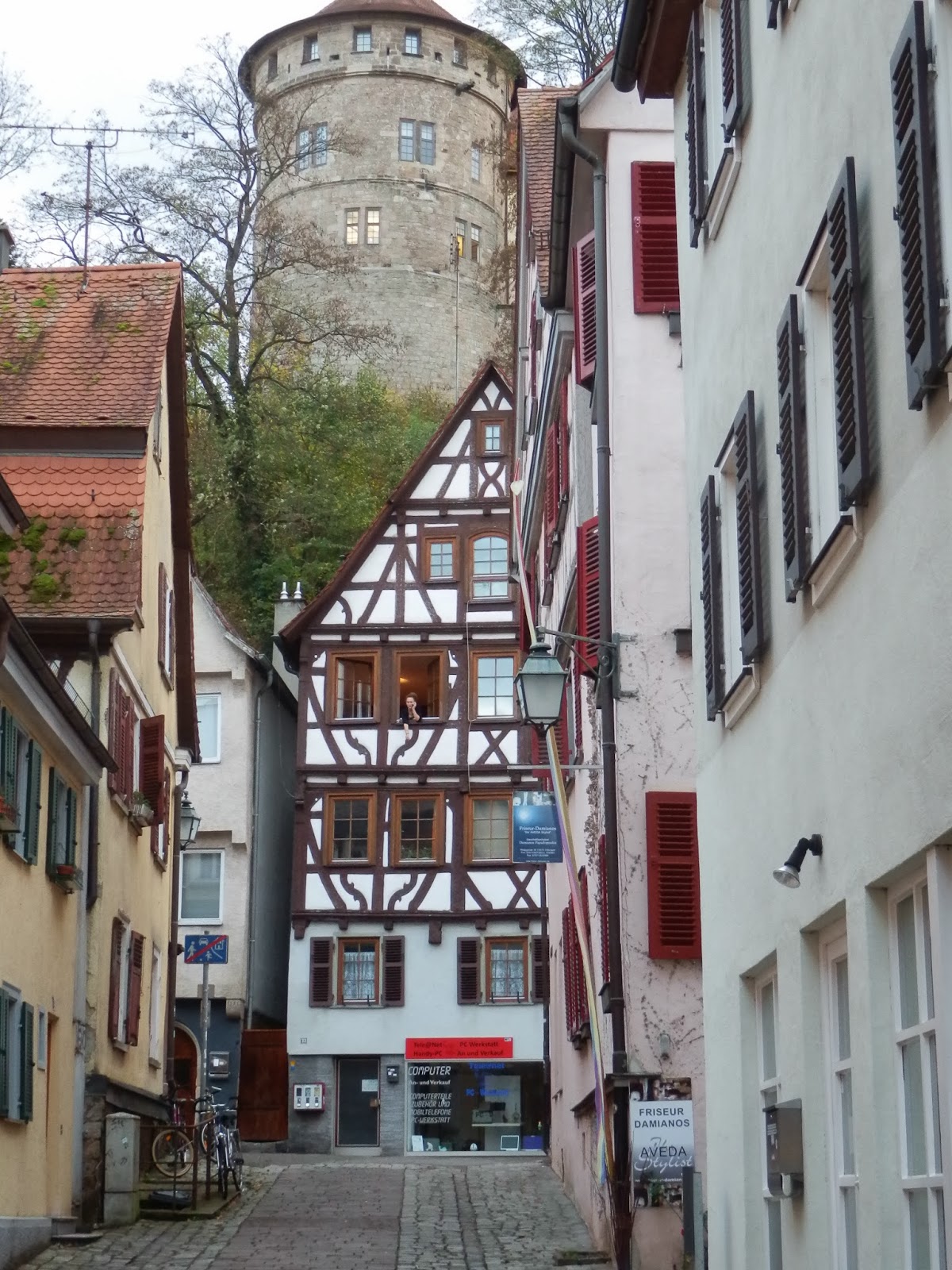
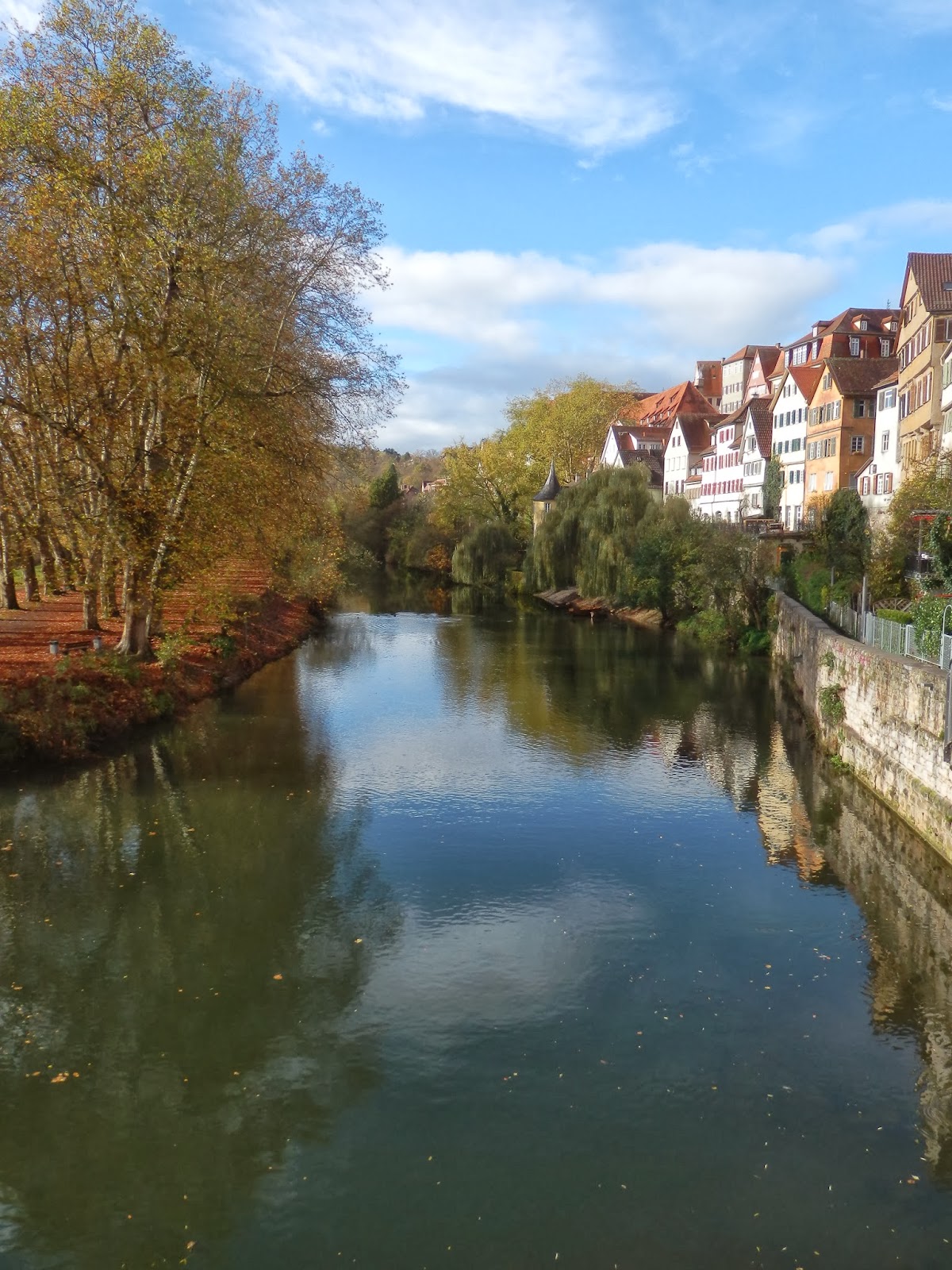
Channelling the Australian theme in Tubingen, Germany ...
Once a jolly swagman camped by a billabong
A watering hole although not quite a billabong!

What picnic would be complete without beer!


under the shade of a Coolibah tree 

and he sang as he watched and waited till his billy boiled
you'll come a Waltzing Matilda with me.
Waltzing Matilda, Waltzing Matilda
You'll come a Waltzing Matilda with me
And he sang as he watched and waited till his billy boiled
You'll come a Waltzing Matilda with me.
Lots to look at while waiting for the billy to boil!
Down came a jumbuck to drink at that billabong
up jumped the swagman and grabbed him with glee
and he sang as he shoved that jumbuck in his tucker bag
you'll come a Waltzing Matilda with me
Selfie with swagman and jumbuck!
Waltzing Matilda, Waltzing Matilda
You'll come a Waltzing Matilda with me
And he sang as he watched and waited till his billy boiled
You'll come a Waltzing Matilda with me.
Up rode the squatter mounted on his thorough-bred
Down came the troopers, one, two, three.
One
Two
Three.
Whose that jolly jumbuck you've got in your tucker bag
You'll come a Waltzing Matilda with me.
Waltzing Matilda, Waltzing Matilda
You'll come a Waltzing Matilda with me
And he sang as he watched and waited till his billy boiled
You'll come a Waltzing Matilda with me.
Up jumped the swagman, sprang in to the billabong
You'll never catch me alive said he,

And his ghost may heard as you pass by that billabong
You'll come a Waltzing Matilda with me.
Waltzing Matilda, Waltzing Matilda
You'll come a Waltzing Matilda with me
And he sang as he watched and waited till his billy boiled
You'll come a Waltzing Matilda with me.
 Documented by the colourful crew from Mars TV
These students were interviewing passers-by about refugees, inequality and prejudice, and while they were focusing on refugees from war-torn countries, marginalised and poor people, such as the swagman in the ballad,
were/are often poorly treated by dominant, powerful groups. 

From Wikipedia with additional information:
Waltzing Matilda is Australia's most widely known bush ballad written in 1895 by Banjo Paterson and has become our unofficial national anthem.  Waltzing Matilda is slang for travelling on foot with your gear slung over your back in a bag (apparently this is known as waltzing  or auf der Walz in German). 

The song is about an itinerant worker, a swagman, making a cup of tea in a billy, (a kind of tin saucepan), at his bush camp by a billabong (waterhole) and stealing a wandering sheep, (jumbuck) for dinner. The swagman wouldn't have been wealthy and would have seen the sheep as fair game and something nutritious to pad out his meagre supplies. 

We know the sheep's owner is a wealthy landowner (squatter) because he arrives on a thorough-bred horse accompanied by three troopers (police) - he wouldn't have been at all happy about having his sheep stolen, particularly by a poor, itinerant worker!

Naturally, the worker wouldn't want to have been locked up so commits suicide by drowning himself in the billabong, leaving his ghost to haunt the site for evermore.


.